Service · Cheyenne, WY
Frozen Pipe Water Damage in Cheyenne, Wyoming
At 6,062 feet, Cheyenne's overnight freezes and 40-degree afternoon thaws make burst pipes the number one water damage call in Laramie County. One free call connects you with an independent local specialist.
Why Cheyenne pipes freeze — and why they burst when they thaw
A pipe does not usually burst at the coldest moment of the night. Ice forms inside the line and expands, pressure builds between the ice plug and the closed faucet, and the pipe wall splits — then the damage only becomes visible when the thaw comes and full water pressure returns to a pipe that is no longer whole. That is why so many Cheyenne homeowners discover a burst pipe on a mild afternoon, hours or days after the freeze that caused it, with water already through a wall or across a floor.
Cheyenne's climate is built for this. Daily temperature swings of 40 degrees or more are normal at this elevation, so pipes in crawlspaces, attics, garages and exterior walls freeze and thaw again and again all winter. Each cycle works on the same weak points: a run of copper with a thin spot, a joint that was never perfect, a line that passes within an inch of an uninsulated rim joist. Older homes in the downtown grid and around Frontier Park, vacant homes between occupants, and manufactured homes with plumbing under the floor are the highest-risk properties in the county.
Signs a pipe has already burst
Water pressure that fades or vanishes on part of the house. The sound of running water when every fixture is off. A ceiling that feels spongy, a wall stain that grows, flooring that buckles or feels warm. Ice or frost visible on an exposed line. A water meter that spins with nothing running, or a well pump that cycles for no reason. Any of these in freezing weather earns an immediate call to (725) 699-0399 — every hour the line stays pressurized, the repair grows.
What to do in the first fifteen minutes
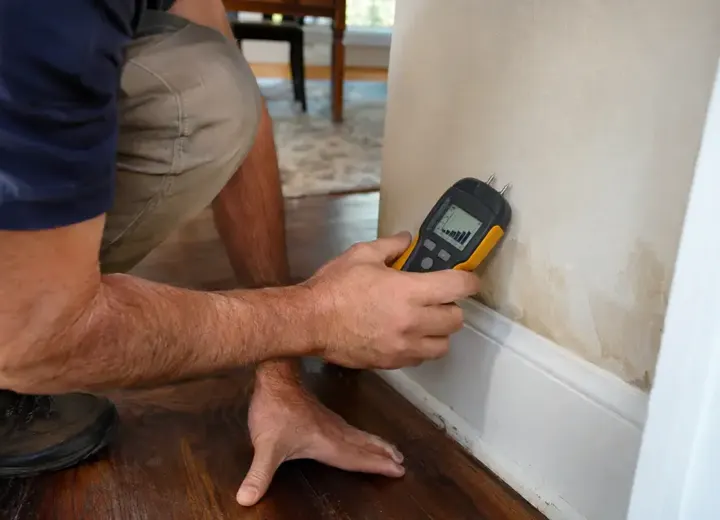
Shut off the water at the main valve — for most Cheyenne homes it is where the line enters the house or at the meter; on a well, the pump breaker does the same job. Turn off power to any area where water and electricity may mix. Then open a faucet below the break to drain pressure, move belongings out of the water's path, and photograph everything. Do not use a torch on a frozen pipe, and do not start cutting into walls yourself: a specialist with moisture meters can find the failure and the full spread of the water first, which is what your insurer will want documented anyway.
The process
How a burst pipe cleanup works
- 1
Source confirmed
The specialist traces the failure — often hidden in a wall or crawlspace — and confirms the water is fully stopped.
- 2
Extraction & opening up
Standing water is extracted and the smallest necessary openings are made to reach wet cavities, insulation and the broken line.
- 3
Structural drying
Dehumidifiers and air movers dry framing, subfloor and remaining materials over several days, tracked with moisture readings.
- 4
Verified dry
Readings confirm walls and floors are back to dry standards before equipment leaves and repairs are closed up.
The pipe is the small bill. The water is the big one.
A plumber's repair to the split section is usually the cheapest part of a burst pipe event. What costs money is everything the water touched before it was stopped: drywall, insulation, flooring, cabinets and the mold that starts within 24 to 48 hours if drying is delayed. That is why the order of calls matters — stop the water, then get extraction and drying moving the same day, and let the pipe repair slot into the plan. One call to (725) 699-0399 starts the matching process.
Honest pricing
What frozen pipe water damage typically costs
| Job | Typical range | What drives the price |
|---|---|---|
| Emergency water extraction | $300 – $1,000 | How much water escaped before shutoff |
| Burst pipe water damage cleanup | $1,200 – $6,000 | Walls/floors opened, rooms affected |
| Crawlspace or attic line failure cleanup | $800 – $4,500 | Access, insulation affected, hidden spread |
| Mold treatment after a pipe burst | $500 – $4,000 | Delay before drying, area affected |
| Full restoration, typical home | $1,200 – $7,500 | Rebuild scope after drying |
Ranges are typical figures from national cost guides (Angi and HomeAdvisor style data) for 2026, shown so you can plan — they are not a quote. Your specialist confirms the exact price before any work starts.
Prevention: the Cheyenne winter checklist
Insulate every line you can reach in crawlspaces, attics and exterior walls — foam sleeves are cheap and the rim joist is where most failures start. Add thermostatically controlled heat tape to the most exposed runs. Disconnect garden hoses in fall and close the interior valves to hose bibs. Keep the house heated, including vacant properties, and on the coldest nights let exterior-wall faucets drip slowly and open the cabinet doors under sinks. If a house will sit empty for weeks in winter, shutting off the water entirely is the strongest move there is. Ask your specialist which of your lines they would protect first — they will have a specific answer for your house, not a generic list.
FAQ
Questions, answered
The things Cheyenne homeowners ask when water shows up where it should not be.
Still unsure?
Describe what you are seeing and we will match you with a local specialist.
(725) 699-0399How do I know a pipe has burst if I cannot see it?
The classic signs: water pressure drops or disappears on one fixture or one side of the house, you hear water running when everything is off, a wall or ceiling develops a stain or bulge, the floor feels warm or spongy in one spot, or your water bill jumps. In winter in Cheyenne, treat any of these as a burst until a moisture reading proves otherwise.
Should I try to thaw a frozen pipe myself?
Gentle warmth on an exposed, accessible pipe — a hair dryer, warm towels — is a common homeowner step, and opening the faucet helps relieve pressure. Never use a torch or open flame, and if the pipe has already split, thawing it will restart the leak: shut the water off first. If the frozen section is inside a wall, ceiling or crawlspace, call (725) 699-0399 instead of opening things up blind.
How much does burst pipe water damage cost in Cheyenne?
Water damage from a burst pipe typically runs $1,200 to $6,000 for the cleanup and restoration side, based on national cost-guide ranges — the pipe repair itself is separate and usually far cheaper than the damage the water does. The specialist confirms the exact price for your job before work begins.
How long does drying take after a burst pipe?
Most burst-pipe drying jobs run 3 to 5 days with professional dehumidifiers and air movers. Walls opened to reach the pipe, saturated insulation or hardwood floors can extend that. Dryness is verified with moisture readings before equipment is removed.
How do I keep pipes from freezing next winter?
Insulate lines in crawlspaces, attics and exterior walls; add heat tape to the most exposed runs; disconnect garden hoses and shut interior valves to hose bibs; keep the heat on — including in vacant homes — and let faucets on exterior walls drip slowly on the coldest nights. Your specialist can point out the specific runs at your home that are most exposed.
Pipe burst in Cheyenne? Stop the water, then call.
Free to call. We connect you with an independent local water damage specialist who serves your part of Cheyenne.